


The Binary Trap of Leadership


There are several assumptions about becoming a leader that are either false or vastly overrated.
Particularly when speaking with numbers- or data-oriented professionals—such as scientists, finance experts, or engineers—their logic is deeply rooted in "either right or wrong" (never both), correct versus incorrect data, and the one right way of doing things.
When they move into a leadership role or deal with employees, they often carry this exact same mindset with them: they treat leadership as a tactical task where there is only a right and a wrong way.
I often notice them feeling uncomfortable or astonished when I say things like, “It really depends on the individual and the situation.” What? No clear-cut answer? No precise, unambiguous advice?
Some expect me to give them a definitive blueprint. When I tell them I can’t, they don't believe me.
Sometimes, there is a clear right or wrong in leadership. But in most situations, there isn't. Life is simply too complex for a one-size-fits-all approach. It really depends.
But let’s look at the assumptions around training.
I know many young professionals who believe they can only step into a leadership role after completing an extensive initial training program. They think that is the mandatory order: first the classroom, then the people.
Well, no.
You don’t need to attend a single training session before you start leading.
That said, if you have the opportunity to familiarize yourself with some basic principles before taking on the role—go for it. Any form of development—whether it's reading a book, attending a workshop, or talking to experienced mentors—will always help broaden your horizon and uncover blind spots.
But a single training session will never be enough.
I remember a manager in his fifties approaching me and asking, “Agnes, why do you want to send me to a two-day leadership workshop? I attended one twenty years ago, and I am far too senior for this.”
Had he been an exceptional leader, I might have agreed. But my arguments were simple: leadership evolves. It helps to realign with the company’s current standards and expectations. Furthermore, in a mixed group, young leaders benefit from senior experience, while senior leaders gain fresh perspectives from the younger generation.
So, he attended the training. Did he enjoy it? I don’t know. Did it make him a better leader? The observable change in his behavior over the following years was marginal.
Some people claim you are either a born leader or you aren't—that leadership cannot be learned. I disagree. In his case, his focus and priorities were simply elsewhere, not on leading people.
Which brings me to my next point: attending numerous training sessions is no guarantee that you will become a great leader either.
If you voluntarily invest in leadership workshops and actively work on your skills, you will improve. But it might take years to truly realize that while your technical field operates in a "binary" world of yes or no, managing people requires you to step into a parallel, "non-binary" world.
The beauty is: these two worlds can coexist.
Once you accept that, the friction caused by this perceived contradiction will disappear, and you will begin to flourish as both a leader and a professional.
However, if you think leadership is just about ticking off a fixed checklist—Leadership Basics Part 1, Leadership Refresh Part 2, and Leadership Update Part 3—and then you’re done, you need to rethink your mindset.
Leadership is not an Excel class where you leave after eight hours with a solid grasp of the basic formulas. After eight hours in a workshop, you will still have no idea how to handle every unique individual you will encounter over the next few years.
Attending ten leadership courses will never make you a true people person if you lack an intrinsic focus on people.
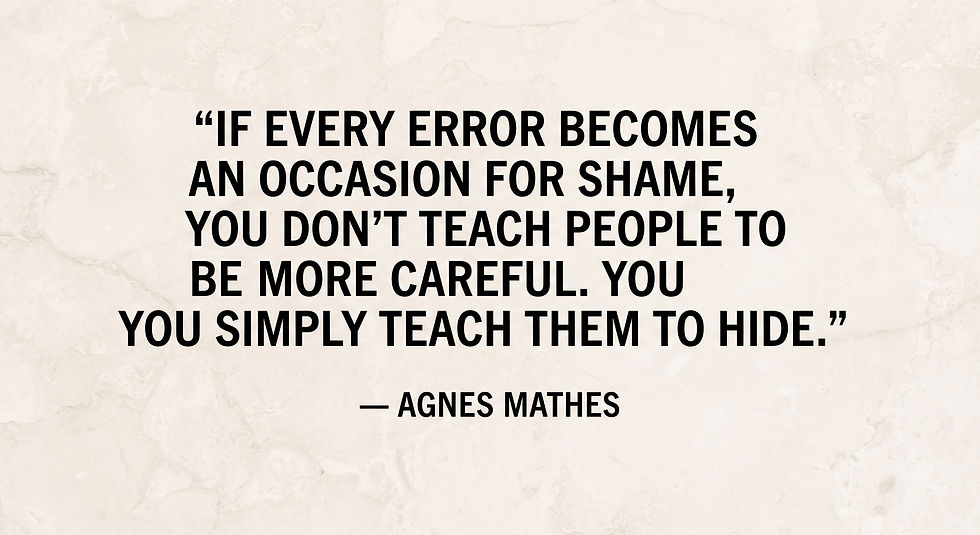
Ultimately, leadership is about doing the work, practicing, and making mistakes. If you combine that real-world experience with a hunger for external feedback, advice, and open exchange—you will be perfectly fine.
Even after forty years of leadership experience, you can still learn something new and adapt your style to changing environments and younger generations.


Comments