


Why Weak Leaders Don’t Issue Warnings – and Strong Ones Don’t Either


In weak organizations, formal warnings are avoided because many leaders shy away from conflict.
"He didn’t mean it."
"She understood that it wasn’t okay."
"We aren't that strict with others either."
Sounds like valid arguments? Usually, they aren't.
Of course, a formal warning has legal relevance. The choice should be deliberate. It is neither fair nor legally sustainable to issue a warning to Employee A while regularly tolerating the exact same behavior from Employees B and C.
And naturally, leadership always begins with a conversation. Only when aligning expectations fails to bring results should next steps follow: from a verbal reprimand to a written warning.
My point, however, is a different one:
A weak leader fails to issue a warning because they prioritize harmony over performance. For a company, this is damaging. But when management clearly defines and trains what expectations apply and where the no-gos lie, leaders react more consistently. Risks drop.
And then there is the master class. I rarely experience it.
In these organizations, boundaries are crystal clear—and management lives them consistently. On every level. If something goes off track, it is addressed immediately. Not to punish, but to protect the cultural standards.
The result: Employees are no longer corrected just by their bosses. Peers help each other get better. They look closer instead of looking away. They improve flawed processes together.
When this standard is reached, formal warnings become obsolete in daily operations.
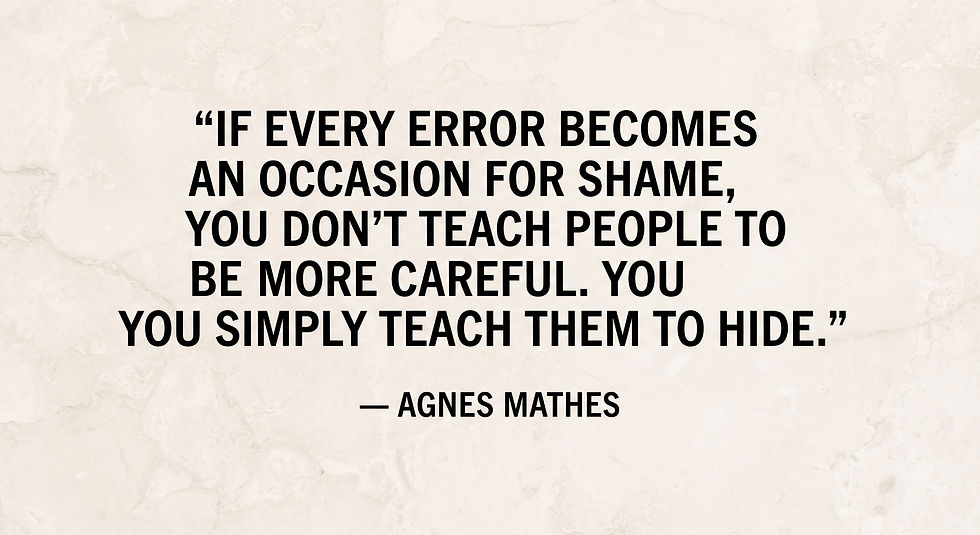
In a mature organization, warnings are not avoided to maintain appearances. They are simply rarely needed. Because problems are solved before they escalate: through genuine psychological safety and a healthy culture of learning from mistakes.
Progress grows from mutual support.
Do you consciously use situations to improve processes together with your team? Feel free to share your experiences.


Comments