


The Hidden Cost of Being Right

In my situations and coachings with senior leaders, I frequently encounter the following thoughts and assumptions:
When someone makes a mistake, we tend to believe that having the facts on our side is enough.
We point out the error.
We expect them to acknowledge it, adjust, and move on.
When they get defensive instead, we assume they can’t take criticism.
But often, it’s not the criticism they are fighting—it’s the humiliation.
The moment a correction targets someone's identity rather than their action, the problem changes. They are no longer dealing with the mistake; they are dealing with feeling exposed or diminished.
There is a profound difference between two approaches:
"You missed this deadline, and we need to adjust the timeline now." (Fixes a specific behavior)
"You are disorganized and unreliable." (Demands they defend their character)
When admitting a mistake carries the price of losing face, most people protect themselves. They withhold information. They shift blame. They wait until a crisis is unavoidable before raising their hand.
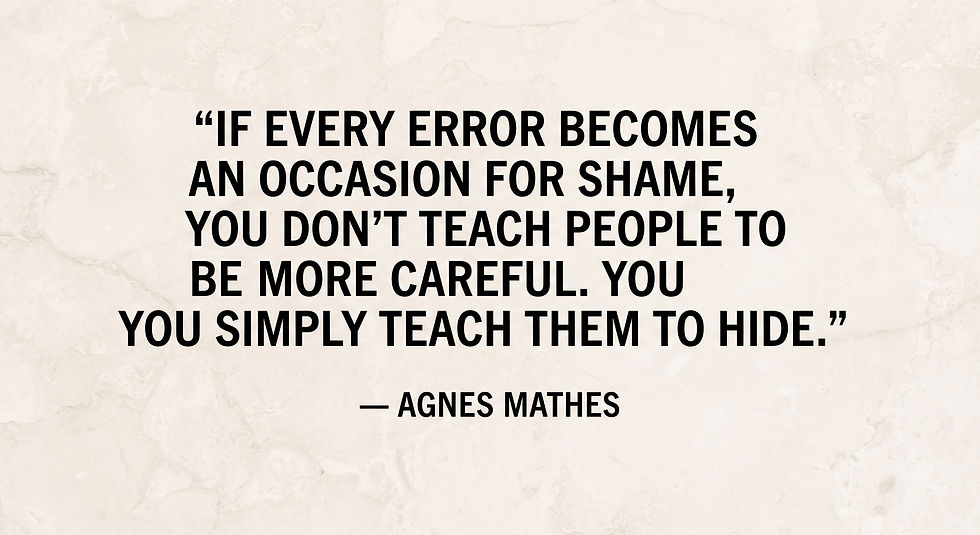
As leaders, if every error becomes an occasion for shame, we don't teach people to be more careful. We simply teach them to be more discreet.
True authority—Quiet Authority—doesn't require making the other person crawl before we accept a resolution.
It means setting uncompromising boundaries. It means being direct, clear, and holding people accountable. But once the truth has done its work, it means knowing when to stop.
The mistake belongs to them. Their dignity doesn't have to belong to you.
How do you handle corrections in your team to ensure accountability without driving mistakes underground?


Comments