


Trust is a Choice, Not a Result


This sounds so logical, yet many supervisors find it challenging in their daily business. When you are new to a leadership role or a new person joins your team, one question often dominates your thoughts:
How can I, as a supervisor, ensure that my employee does the work they are supposed to do? How will I know if they are performing according to my expectations?
If you are just starting this professional relationship, the honest answer is: You don’t. You cannot know.
Insecurity arises. You feel the urge to control the situation to ensure everything runs smoothly. But how can you control something you don’t yet understand? You can’t.
Ouch. That is an uncomfortable place to be. But here is the secret: Let go. Give up the illusion of control. What you actually need to start with is trust.
But how can you trust someone you barely know? Isn’t trust something that must be earned over time? Yes and no.
Certainly, the more positive experiences you collect, the fuller your shared "trust account" becomes. Each success is a deposit into that account. In that sense, time is a factor.
But let’s focus on the "no"—and it’s a big "no": Trust is a choice. You don’t need to know someone for years before choosing to trust them. Trust is a mindset.
Assuming you’ve gone through a hiring process, you’ve already gained a first impression. (Granted, first impressions are often filtered through our own past experiences and can be biased, but let's assume the impression was positive.) The foundation is set.
The very next step is a personal decision. In this moment, you can choose to trust. You tell yourself:
"My new employee will be great. They will work differently—different from me and different from their colleagues—because we are individuals, not clones."
By making this choice, you commit to the following:
Knowledge Transfer: I will provide all the information they need to succeed.
Clear Communication: I will share my expectations regularly, knowing they cannot read my mind.
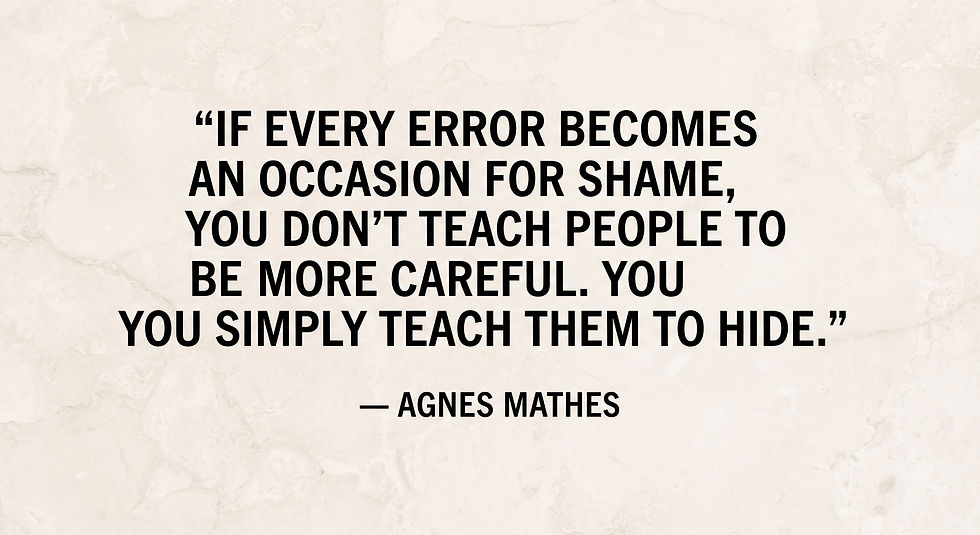
Assumption of Good Intent: I will assume they mean well. When (not if!) a mistake happens, I will use it as an opportunity to understand what they need. I will ask myself if I need to adapt my leadership style or communication.
Autonomy: I will ensure they have a defined role and clear responsibilities. Within that frame, I will let them work independently rather than dictating the what, when, or how.
What if trust is broken? If you feel closer supervision is necessary, speak openly. Your employee should understand why you are changing your leadership style and what you expect from that change. Ideally, you should reach an agreement on precise development actions to help them reach the expected level.
It is vital to remember that close supervision should always be a temporary solution. Once you are convinced they understand the requirements, return to trust immediately. Agree on the steps to phase out supervision and—once again—choose to believe in the person.
Avoid the trap of thinking that past behavior is a permanent blueprint for the future, especially if a mistake only happened once.
Trust is a powerful enabler. In a trusting environment, teams bloom and perform at high levels. They will feel they have agency. They will know you rely on them. Most importantly, they will experience true meaning in their work.


Comments